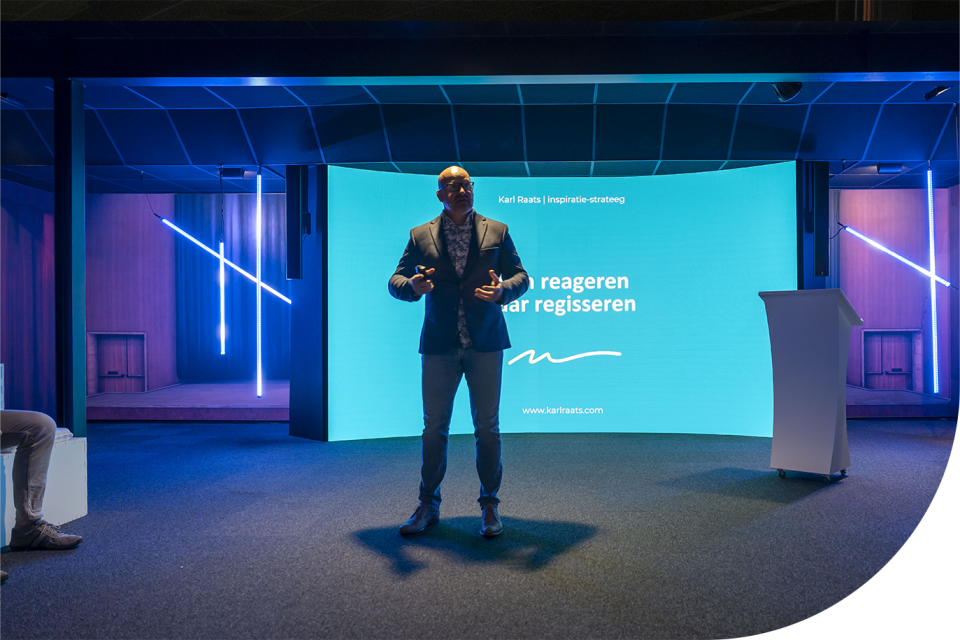

From reacting to directing with AV technology
Moving from reacting to directing does not automatically mean introducing more technology. It is primarily about gaining better insight into what is happening within an organisation and using that information to make earlier decisions. Audiovisual technology can play an important role in that process.
From reacting to directing: how technology helps organisations stay ahead of problems
Many organisations spend a significant amount of time solving problems that only receive attention once they have already become visible. A meeting room does not function properly, information reaches employees too late or equipment unexpectedly stops working.
In many cases, action only follows after the problem has already occurred.
Technology can help organisations gain insight earlier. By using information more effectively, centrally managing systems and monitoring technical environments, potential issues can become visible sooner and organisations can act more deliberately.
That is what From reacting to directing is about.
What do we mean by From reacting to directing?
Reacting means that something first needs to happen before action is taken. A fault is reported, a room turns out to be unavailable or a user encounters a technical problem.
Directing starts earlier.
It means having enough insight into what is happening within an organisation to make more deliberate decisions. Technology can support this by making information available, creating greater visibility across systems and providing better insight into how rooms and equipment are actually used.
When it becomes clear how spaces are used, where technical issues occur and which information employees need, environments can be improved in a more targeted way.
Why do organisations often still work reactively?
Technical environments usually develop over time. New systems are added, rooms are adapted and different solutions operate alongside one another.
As long as everything works, there may seem to be little reason to change anything.
Only when users experience problems or equipment fails does action become necessary. As a result, IT teams, facility departments and technical managers can spend a considerable amount of time resolving incidents.
By connecting systems, information provision and technical management more effectively, organisations gain greater visibility. Not only into what is already going wrong, but also into where potential issues may arise.
Better information enables earlier action
Insight is essential for greater control.
Data from different systems can, for example, show how spaces are being used, which equipment regularly causes problems and which facilities are hardly being used at all.
This makes it possible to answer questions such as:
- Which rooms are used intensively?
- Where do technical issues occur regularly?
- Which equipment is rarely used?
- Which information do employees and visitors need?
By using this information structurally, patterns become more visible. This creates opportunities to make adjustments earlier instead of waiting until a problem occurs.
What role does audiovisual technology play?
Audiovisual technology is often primarily seen as something that simply needs to work.
A display should show an image, a microphone should provide intelligible sound and a meeting room should connect easily to Teams or Zoom.
But AV technology can also actively contribute to greater control.
Examples include:
- Central management of displays
- Monitoring of audiovisual equipment
- Smart room reservation systems
- Digital information provision
- Isight into the use of rooms and systems
When these solutions work together effectively, organisations gain greater visibility across the technical environment. Problems may become visible earlier, equipment can be managed more deliberately and information can be made available at the right moment.
Audiovisual technology therefore becomes more than something that needs to function. It can also become a tool for better decision-making and control.
Greater control across different AV environments
The possibilities go beyond meeting rooms alone.
Different audiovisual solutions within an organisation can contribute to greater visibility and control.
Digital displays can provide employees and visitors with up-to-date information. Central management can make it possible to manage several displays or systems from one environment. Monitoring can provide insight into the technical status of equipment, while reservation systems can help make room usage and availability more transparent.
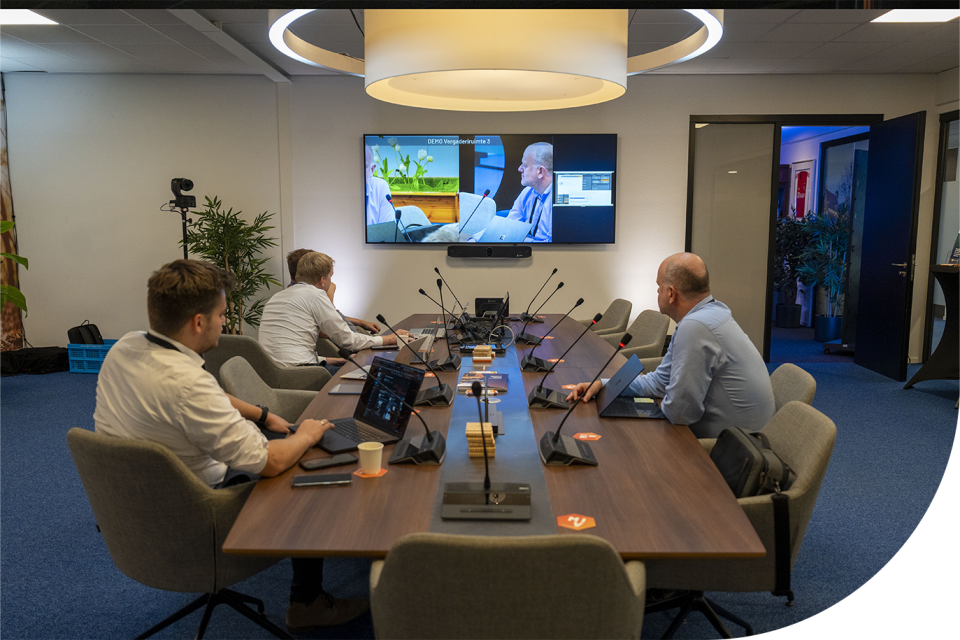
Ease of use also remains important within meeting rooms. Technology can make collaboration easier and provide greater insight into how spaces are actually used.
Looking at these applications as part of one environment creates a more complete view of the organisation's audiovisual landscape.
Technology and creativity strengthen each other
Innovation quickly brings new equipment, automation or artificial intelligence to mind.
New technology can give organisations new ways to gather information, manage systems and organise processes more intelligently. But simply adding technology is not enough.
The question remains how those possibilities can best be used.
Creativity therefore plays an important role alongside technology. It helps organisations look beyond the current situation:
- What can be made simpler?
- Which information is missing?
- Which actions can be organised more intelligently?
- Where can technology help make problems visible earlier?
- How can different systems work together more effectively?
Technology creates new possibilities. Creativity helps determine how those possibilities can be used in a meaningful way.
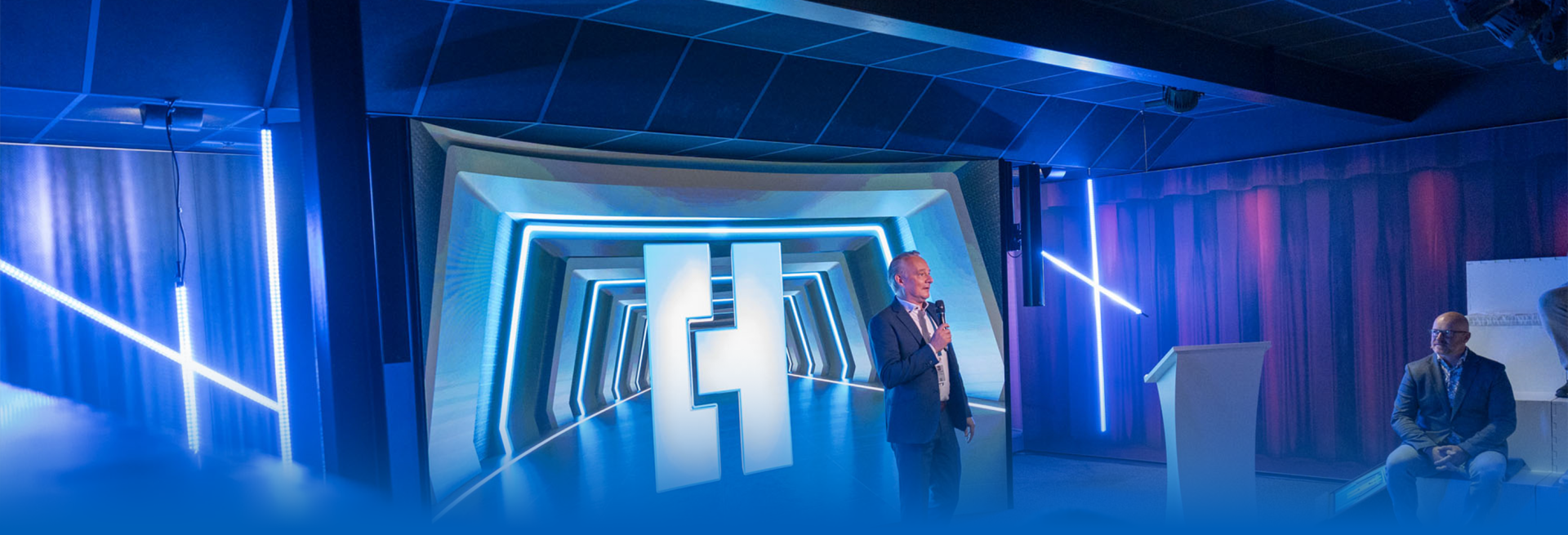
From reacting to directing during Inspiration Week
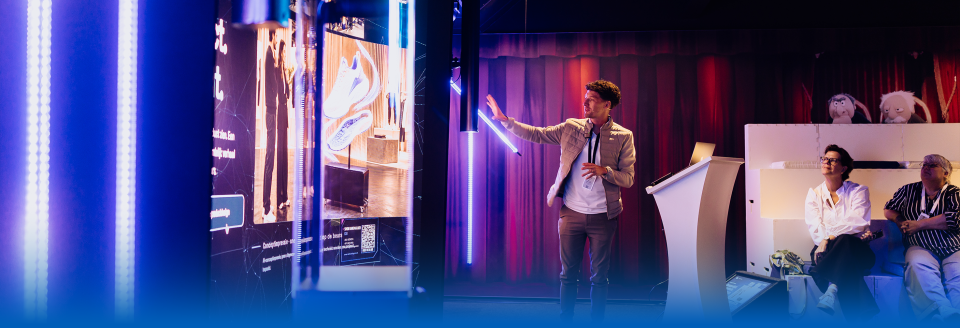
During our Inspiration Week, From reacting to directing is the central theme.
We explore the role of technology, information and creativity in organising environments and processes more intelligently.
Together with, among others, Karl Raats, we look at the role of creativity within organisations. How can an existing problem be viewed differently? How can fixed patterns be challenged? And how can new solutions emerge that may not have been immediately obvious?
The combination of creativity and technology can help organisations become less reactive and more forward-looking.
How we help organisations gain more control
We look beyond individual pieces of equipment.
We consider the environment in which audiovisual technology is used, the people who work with it and the information needed to make that environment function effectively.
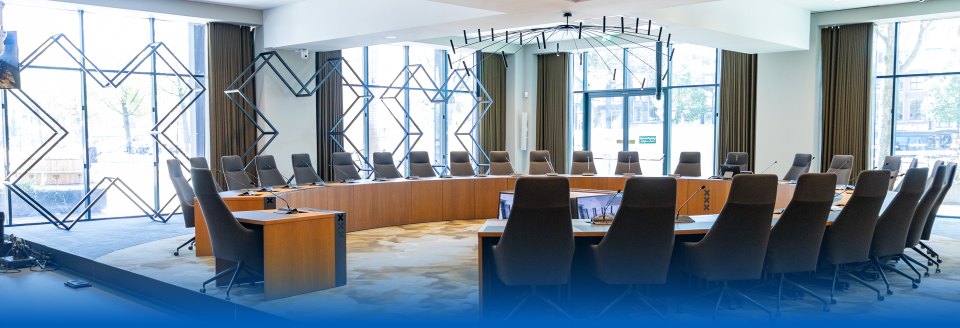
This can mean advising on meeting-room design, centrally managing audiovisual systems, using monitoring, improving digital information provision or designing technical environments in a way that makes management simpler and more transparent.
Our goal is not only to make sure technology works today. We want to use technology in a way that creates greater insight, visibility and control.
That is ultimately the difference between reacting and directing: not only taking action when a problem has already occurred, but using technology and information to recognise earlier where attention is needed.
Greater control over the audiovisual environment
Greater control starts with insight into the environment and the possibilities technology offers to support processes more intelligently.
Contact us to discuss how audiovisual technology can contribute to greater insight, visibility and control within the organisation or to schedule an advisory conversation.
View other references


Let's get in touch
Want to know how we can take your business to the next level? Then get in touch!
Heuvelman stands for:
- Innovative tailor-made audiovisual total solutions
- Reliable and sustainable services
- Experienced and skilled team with a focus on high quality
- Personal support from start to finish
- Flexible in planning and execution
- ISO 27001 certified for rental and sales projects